Effect of Flooding on Rice Production in Ebonyi State, Nigeria
DOI:
https://doi.org/10.83046/1jw1-6263Keywords:
Flooding, Rice field, Climate changeAbstract
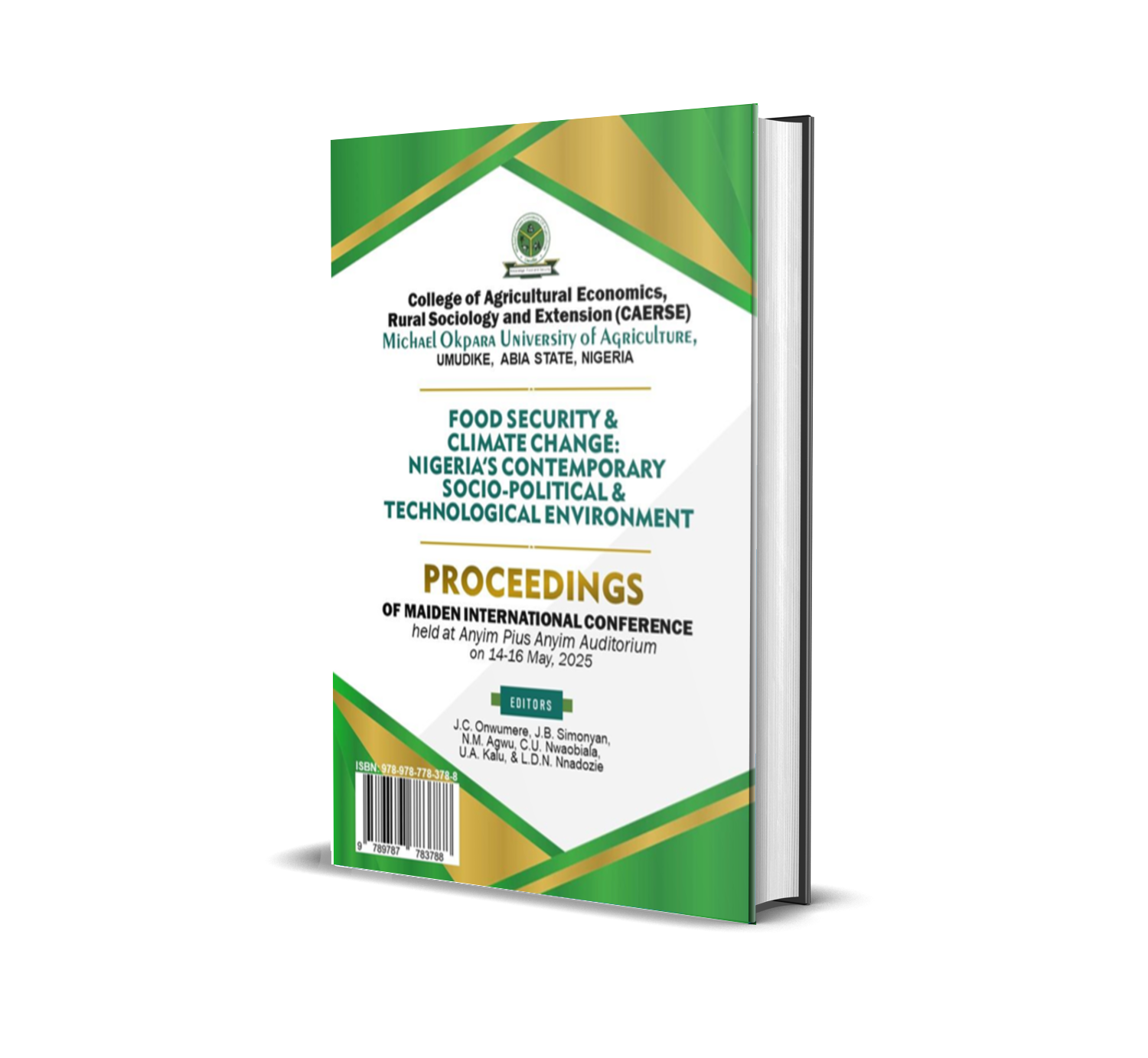
This study assessed the effect of flooding on rice production in Ebonyi State, Nigeria and specifically ascertained the causes of flooding in the rice fields; the effect of flooding on the rice fields; the effect of flooding on rice yields in different production system; various strategies adopted in handling the effect of flooding; and identified the constraints associated with rice production in the study area. Multistage sampling procedure was used to select 120 rice farmers for the study. Data were collected using structured questionnaire, analysed using descriptive and inferential statistics and confirmed during focus group discussion (FGD). Results show that there are several causes of flooding in the study area. Some of which are heavy rainfall ( = 3.92), absence of proper and coordinated watershed management practices ( = 3.92), poor drainage ( = 3.82), and climate change ( = 3.55). The effects of flooding on rice fields include labour shortage ( = 4.0), loss of rice seeds (= 3.6), loss of farm field ( = 3.5), reduced growth rate of shoots ( = 3.05), submerged whole rice fields ( = 3.0). gradual decrease in germination rate ( = 3.25) and non-emergence of seeds ( = 3.25). Lowland, swamp and upland rice production systems suffer 67%, 57% and 51% loss of yield respectively. Strategies adopted to manage flooding include planting of early maturing rice varieties (92%), cleaning out drainages (82%), building irrigation channels (77%), construction of terrace slopes (59%) and building of flood barriers (57%). Constraints faced by the farmers include low productivity (98.3%), poor access road (98.3%) and climate variability (98.3%). The study concludes that flooding has negative effects on rice production in the study area. The study therefore recommends the adoption of irrigation farming so that farmers can take advantage of off-season production and avoid the flooding season. Farmers should ensure that water ways are clear to ensure free flow of water.
Downloads
References
Downloads
Published
Issue
Section
License
Copyright (c) 2026 Authors

This work is licensed under a Creative Commons Attribution 4.0 International License.