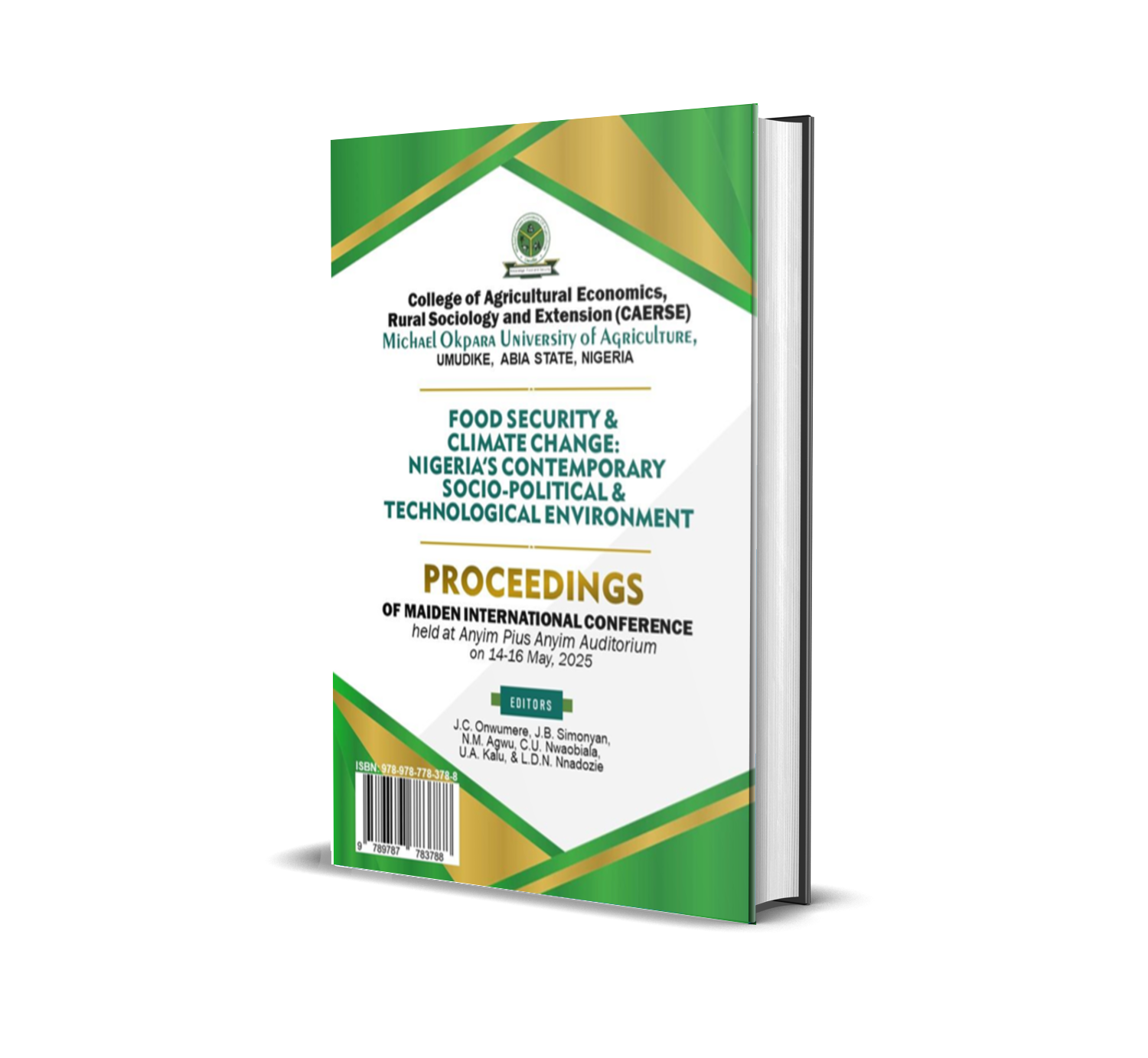
Effect of Engagement in Selected Fruits Production on Rural Households’ Income in Abia State, Nigeria
DOI:
https://doi.org/10.83046/yy2t-cv27Keywords:
Household, Engagement, Fruits production, RuralAbstract
This study assessed households’ engagement in fruits production for livelihoods in Abia State, Nigeria. Multi-stage random sampling techniques were employed to select two hundred and forty (240) households engaged in fruits production in the study area. Data were collected using structured questionnaires and analyzed using both descriptive and inferential statistics including mean, frequency, percentage and ordinary least square regression models. Findings revealed that the most commonly grown fruits included star apple (90.8%), African pear (89.6%), orange (87.5%), pawpaw (81.7%) and mango (81.7%). The mean scores from the engagement index showed a high level of engagement in fruit production, harvesting by rural households with a mean score of 3.2. The regression result showed that the coefficient of age, educational level, farming experience and sex significantly influenced engagement in fruit production at 1% level. The ANOVA results was significant at 1% level which suggest that there is a significant variation in the estimated monthly income earned from fruit production across the different groups of respondents. The study concluded that fruit farming substantially improved household income and is a viable livelihood strategy for households in Abia State. The study recommends promoting fruit production among rural households, particularly targeting educated and experienced farmers, can further strengthen rural economies and improve living standards in Abia State and similar agro-ecological zones in Nigeria.
Downloads
References
Downloads
Published
Issue
Section
Categories
License
Copyright (c) 2026 Authors

This work is licensed under a Creative Commons Attribution 4.0 International License.